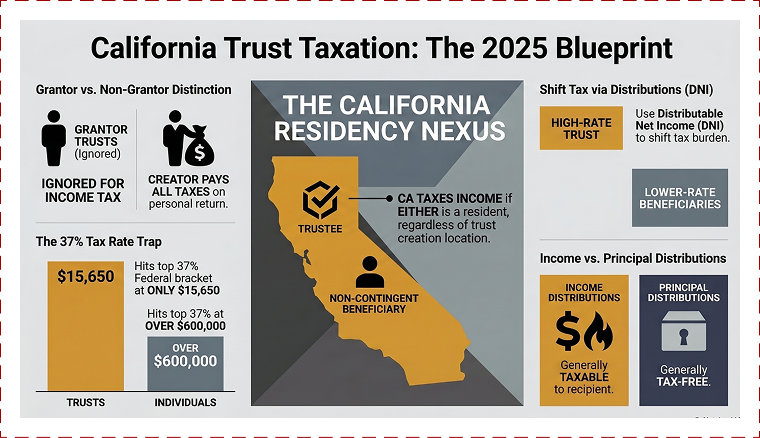
The Grantor versus Non-Grantor Distinction
The primary determinant of tax liability is the classification of the trust as either a grantor or a non-grantor entity under the Internal Revenue Code (IRC). A grantor trust is essentially disregarded for federal income tax purposes. If the grantor retains specific "triggers"—such as the power to revoke the trust, swap assets, or borrow without adequate security—the grantor remains the taxpayer. In this scenario, all income is reported on the grantor’s personal Form 1040, and any trust distribution tax is effectively prepaid by the grantor.
Conversely, a non-grantor trust is a separate legal entity. It must obtain its own Taxpayer Identification Number and file a separate irrevocable trust tax return using IRS Form 1041. For these trusts, the ultimate taxpayer is determined by whether the income is retained within the trust or distributed to its beneficiaries.