What $2 Million Really Means in Retirement Planning
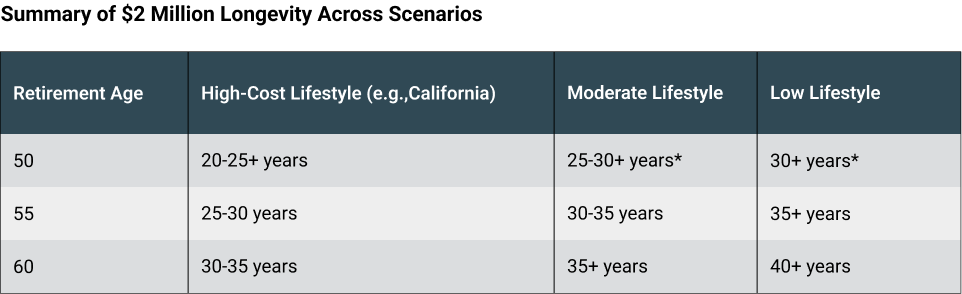
Retirement planners will often use guidelines like the “4% rule”—withdrawing 4 % of your portfolio in the first year of retirement and adjusting for inflation thereafter—to estimate how long retirement savings might last. This rule originally aimed to help a portfolio sustain withdrawals over a 30‑year retirement with a balanced mix of stocks and bonds.
In 2025–26 research, Morningstar’s updated guidance suggests a 3.9 % “safe” withdrawal rate as a baseline for a 90 % probability of lasting at least 30 years. That means:
- At $2 million, a 3.9 % withdrawal equals about $78,000 per year initially.
- A 4 % withdrawal equals about $80,000 per year initially.
However, real‑world retirees will often withdraw much less—around 2 %–2.2 % of their balances annually—simply due to uncertainty about markets and longevity risk.